
When should I see a GP about gynaecomastia?
- you're over 18 and it's new, or it's getting bigger
- it's on one side only
- it's painful and the pain isn't easing
- you're a teenager and it has lasted more than two years, or you're past 17 and it's still there
- it's affecting how you feel, what you wear or what you do
Don't wait on these
See your GP soon, not in a few months, if you notice:
- a hard lump, or a lump that is off to one side rather than centred under the nipple
- a lump that is fixed and doesn't move under the skin
- fluid or blood coming from the nipple
- a nipple that has turned inwards, or skin that is dimpled, red or sore
- a swelling or lump in your armpit
- a change on one side only that is getting bigger
Most of the time these turn out to be harmless. They still need a doctor to feel them, because about 30 men are diagnosed with breast cancer in Ireland each year.
What the GP will ask
Most of the appointment is questions, because the answers point to the cause. Expect to be asked how long it's been there, whether it's sore, and whether it's changing. Then: every medicine you take, including from abroad or online, anything from the gym (steroids, SARMs, prohormones, "test boosters"), how much you drink, whether you use cannabis, and whether your weight has changed. Be straight about steroids. GPs hear it every week, and it changes which tests make sense.
They may also ask about your sex drive, erections, energy and shaving, because those point to testosterone.
The examination
The GP looks at and feels both sides of your chest, usually with you lying down, using the same pinch test described in our self-check guide. They feel the armpits for glands. Many GPs also examine the testicles, because a small number of cases come from a testicle problem. It's quick, and it's routine.
What tests happen?
If you're a healthy man, the tissue has been there more than a year and the examination is normal, you may need no tests at all. Otherwise:
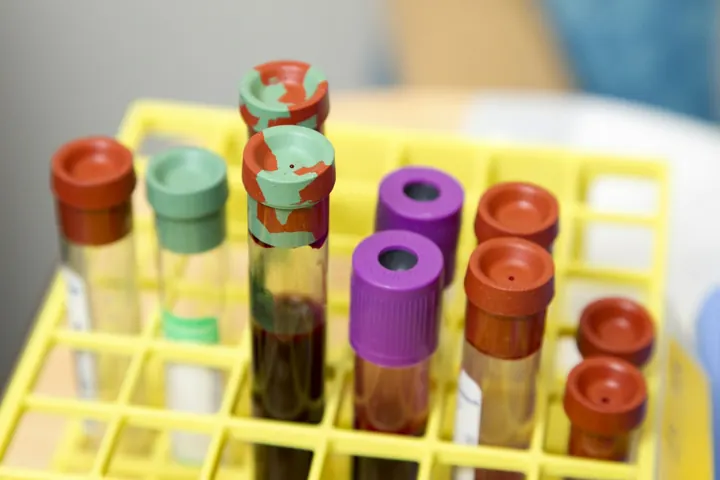
| Test | What it involves | What it shows |
|---|---|---|
| Blood tests | Testosterone, oestradiol, LH and FSH (the pituitary signals), prolactin, and sometimes hCG | Whether the hormone balance is off, and why |
| Liver, kidney and thyroid tests | Routine bloods | Whether an illness is behind it |
| Ultrasound of the chest | A quick scan, no radiation | Gland or fat, and the shape of any lump |
| Mammogram | An X-ray of the breast, usually for men over 40 or with a worrying lump | Whether a lump needs a closer look |
| Ultrasound of the testicles | Only if the hormone results or the examination suggest it | Rare hormone-making causes |
| Biopsy | Rarely: a needle sample of a lump | Only when a scan can't rule things out |
What happens next
Most men leave with reassurance and a plan: wait and watch for a few months, change a medicine, cut out steroids or alcohol, or lose some weight. If the bloods show a hormone problem, the GP refers you to an endocrinologist. If a lump needs a closer look, you go to a breast clinic, where men are seen too.
If the tissue is long-standing, the tests are clear and it still bothers you, the next step is a consultation with a plastic surgeon. Public surgery for gynaecomastia is limited, so most men who want it for how it looks go privately. The GP's letter and test results are useful to bring.
Feeling awkward about going?
Most men put this off. GPs see gynaecomastia often, in boys and in men of every age, and they don't find it odd. If it helps, start with "I've a lump behind my nipple I want checked". It gets you examined, and that's what matters.
Questions people ask
Do I need a referral to see a plastic surgeon?
Private clinics in Ireland usually see you without one, but many surgeons like a GP letter, and some want your test results first. A GP check first also rules out a cause that surgery wouldn't fix.
Will the GP make me stop my steroids?
The GP will tell you plainly that steroids are a likely cause and that the tissue can keep growing while you use them. What you do next is your decision. They're there to help, not to report you.
Can a pharmacist help?
A pharmacist can tell you whether one of your medicines is known to cause gynecomastia, and it's a good first question to ask. The examination still needs a GP.
How quickly should I be seen?
Within a week or two for any of the warning signs. For a soft, slowly-growing change on both sides, a routine appointment is fine.